
Knowing some of the history of Freemasonry not only helps us understand from where it came from but also helps us be part of its future. There are several theories about the origins of Freemasonry and even when Freemasonry as we know it came into being.
The general consensus amongst masonic scholars is that it descends directly or indirectly from the organisation of operative stone masons who built the great Abbeys, cathedrals and castles of the middle ages and debate exists as to where it originated. Difference between the various points of view turn largely on their view of the connection, if any, between what we call ‘operative’ and ‘speculative’ masons.
The word ‘operative’ describes working masons, those who actually work with stone. The trade of the working stone mason reached its zenith with the building of the castles and great cathedrals from the 12th to the 16th centuries. AJ Taylor speaks of the construction of Beaumaris Castle (in about 1290) which involved a labour force of 400 masons, 2,000 minor workmen, 200 quarrymen and 30 smiths and carpenters with a supply organisation of 100 carts, 60 wagons and 30 boats.
The ‘Mother Lodge of Scotland ‘ Lodge Mother Kilwinning No 0, on the rolls of the Grand Lodge of Scotland, claims that their history dates back to 1190 and the building of an Abbey and where a lodge was founded in the chapter house within the Abbey and remained there until the reformation in 1560.
Masons working on such buildings created ‘lodges’, shelters at the building site or quarry in which to talk, exchange views and no doubt complain about their Master and their working conditions, much like we do about our employers today.

In the middle ages, it is held, masons like many men who were part of a trade or craft, went through an apprenticeship of several years, became journeymen and after many more years of learning and working their craft they were considered qualified and master masons. They were also considered free men. The word is still used in the Guilds or Livery Companies and in the title ‘Freeman of the City of London.’
Because they worked so hard and for so long to become qualified in their craft, understandably they did not want unqualified people – often called ‘cowans’ – taking their jobs. The same principle still applies today in many industries through the implementation of industry standards and schemes such as Corgi Registered Fitters, ensuring that people know that the tradesman is skilled at his trade or craft.
Given few people could read and write back then, certificates or other modern systems were of little use and so, as this theory goes, the stone masons used more basic modes of recognition, most likely signs and words, to demonstrate that they were properly qualified and experienced and these they kept secret for obvious reasons.
It is perceived that at some point men who were not working or operative masons either joined existing lodges, perhaps to help in some other capacity or created their own in imitation of them and occurred earlier in Scotland than in other parts of the UK and it is the beginning of what we call ‘speculative’ masonry.

The old word ‘speculative’ describes someone who ponders on, or speculates about, the meaning of things. The speculative mason uses the tools and practices of masonry as symbols for moral teaching.
So this theory is of a transition from operative to speculative masonry by members of these new lodges and could provide a clue as to the origins of freemasonry. Once the period of cathedral building was over, most masons would have been working in the larger conurbations, not spread out as before.
Indeed, after the Great Fire of London, masons were pulled in from all over the country to rebuild the city. As the building became more concentrated, masons ceased to meet in lodges on building sites in favour of more comfortable surroundings and men who did not actually work in the trade joined in.

Some people disagree with this ‘transitional’ theory. They see the origins of freemasonry as being completely different and speculative Freemasonry as a quite separate creation, arising probably in the 16th century, perhaps in reaction to the religious troubles of the time. Just think of Henry VIII, Bloody Mary, Cromwell and the later Jacobite rebellions. This may have led well-meaning men to seek ways of meeting together, irrespective of creed.
The fact that from its very beginning, speculative Freemasonry has been open to men of all religions may be evidence for this. We still forbid all religious and political discussion in Lodge. During the 17th century, we see the spread of speculative Freemasonry. There is a view that King James VI of Scotland (later James I of England) was accepted into a Scottish Lodge in 1601. From 1620, there is evidence of the ‘Acception’, part of the London Company of Masons open to people who were not operatives. This is the derivation of part of our name, ‘Free and Accepted Masons.’
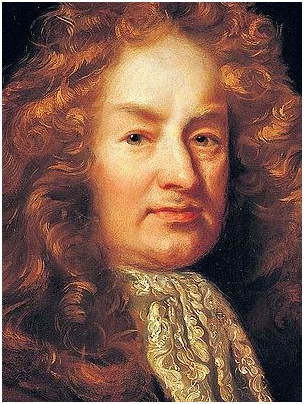
In 1646, Elias Ashmole, the great antiquary whose name lives on in the Ashmolean Museum in Oxford, was made a Freemason in Warrington in Cheshire. In 1686, the writer Robert Plot and the celebrated diarist John Aubrey both mention and describe aspects of Freemasonry and the origins of Freemasonry..
In 1717, the modern organisation of Freemasonry begins with the premier Grand Lodge. Four existing Lodges in London got together ‘and resolv’d to hold an annual assembly and feast.’ The first meetings were held at the Goose and Gridiron in St Paul’s Churchyard. Modern Freemasonry grew from there. Were these the origins of Freemasonry?
With debate as to the actual origins of Freemasonry it is likely that many of the arguments are indeed true and that Freemasonry in its present form has evolved and continues to evolve as it meets the challenges of present day and continues to be at its heart a fraternal organisation which is non-political and non-religious, and which achieves a great deal through its charitable works, and where its members can still have some fun!

(Thames House in Spooks!)
Taken by Adrian Pingstone in November 2004 and released to the public domain.
Original text by W. Bro.David West. Used with permission of St Laurence Lodge. Grateful thanks.